Galicia is Spain's green corner — Atlantic, Celtic-flavoured, and quieter than the more famous southern regions. In a week you can drive a clean loop through every regional capital, end a thousand-year pilgrim trail, walk a Roman wall that still circles a city, see fishing villages older than most European countries, and eat some of the best seafood in Europe. This 7-day itinerary visits seven Galician cities and asks for around four hours of driving across the week.
Before You Go: The Essentials
Galicia is small in distance, big in variety. The seven cities on this route sit inside a triangle roughly 200 km on each side, all connected by good motorways (AP-9 along the coast, A-6 inland). You'll never drive more than ~2 hours in a single hop.
A rental car is essential. Trains and buses connect the bigger cities but you'll miss Combarro, Cíes Islands, and the Roman heritage in Lugo without your own wheels. Pick the car up at Santiago de Compostela airport (SCQ) — it's the geographic and logistical centre of the loop.
The Route at a Glance
The full circuit: Santiago airport → A Coruña → Santiago de Compostela → Lugo → Combarro → Pontevedra → Vigo → Ourense → Santiago airport. Around 650 km in total, almost entirely on motorways. Total driving time across the week is roughly four hours.
7 cities, ~650 km, mostly motorway. Longest single drive: Lugo → Combarro (~2 hours).
Day-by-Day Itinerary
A Coruña — The Atlantic Skyline
Pick up the rental at Santiago airport and drive 30 minutes north to A Coruña. The headline sight is the Tower of Hercules (Torre de Hércules) — the only Roman lighthouse still functioning, a UNESCO World Heritage site. Wander the Old Town around Plaza de María Pita, then end the day on Riazor or Orzán beaches before tapas along Rúa de los Olmos.
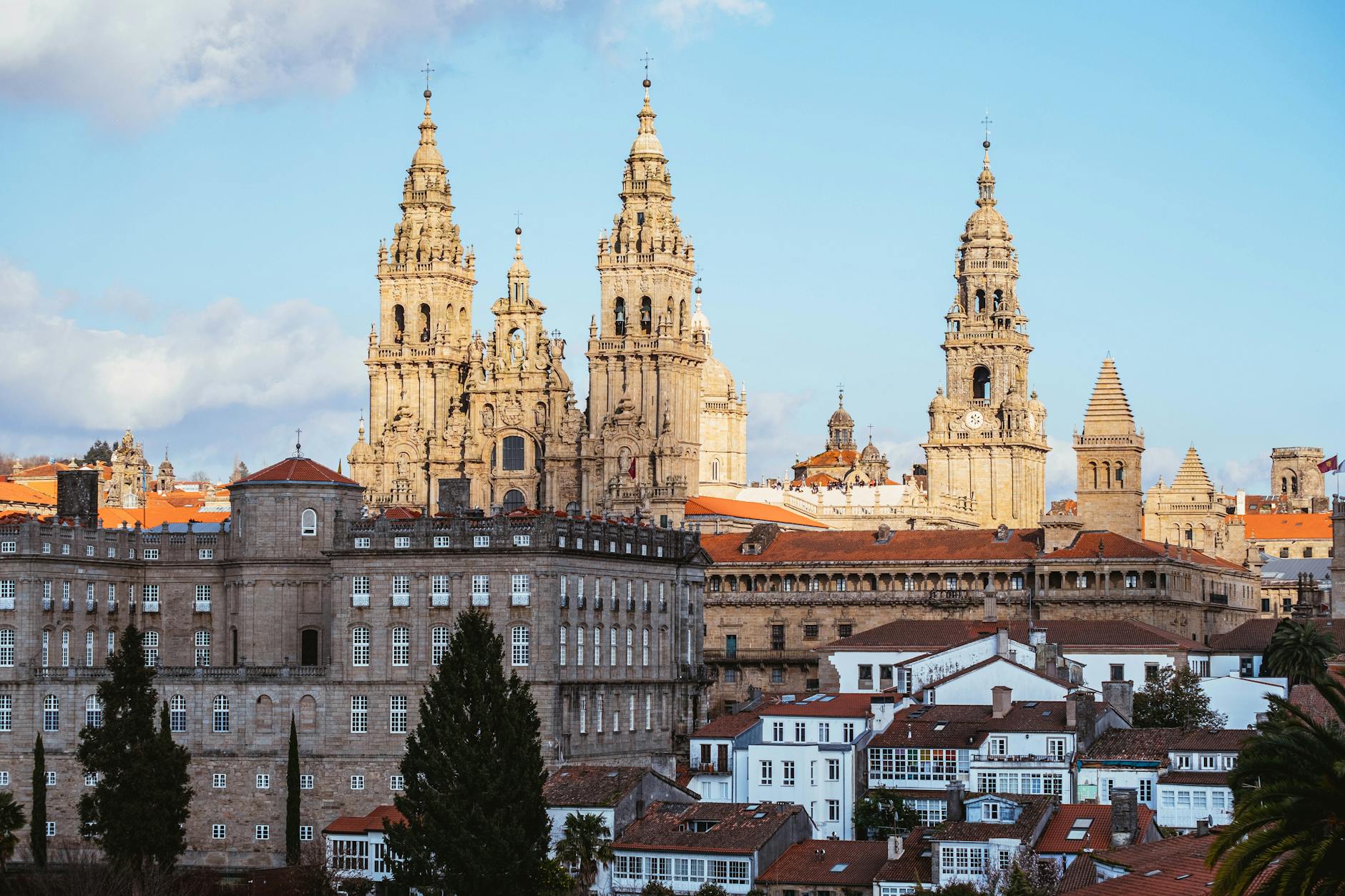
Santiago de Compostela — End of the Camino
It's a short 50-minute drive back south to Santiago. Start at Praza do Obradoiro to watch arriving pilgrims complete the Camino — many of them moved to tears. The cathedral is the obvious centrepiece; if you can, time your visit for the Botafumeiro (the giant swinging incense burner), which is scheduled on certain feast days. Book the Pórtico da Gloria entry slot ahead — only a few visitors per hour are allowed in. Lunch at Mercado de Abastos: oysters and a glass of Albariño.
Lugo — Roman Galicia
Drive 90 minutes east to Lugo. The full circuit of the Roman Walls — UNESCO, ~2.2 km long, completely free — is the must-do here. The Domus del Mitreo is a tiny but extraordinary in-situ Roman house found under the modern city. Stay for the evening: Lugo has Galicia's best free-tapa tradition, where most central bars serve a generous tapa with every drink ordered. Bar Caribe and Mesón de Alberto are reliable starting points.
Combarro — Stone Granaries by the Sea
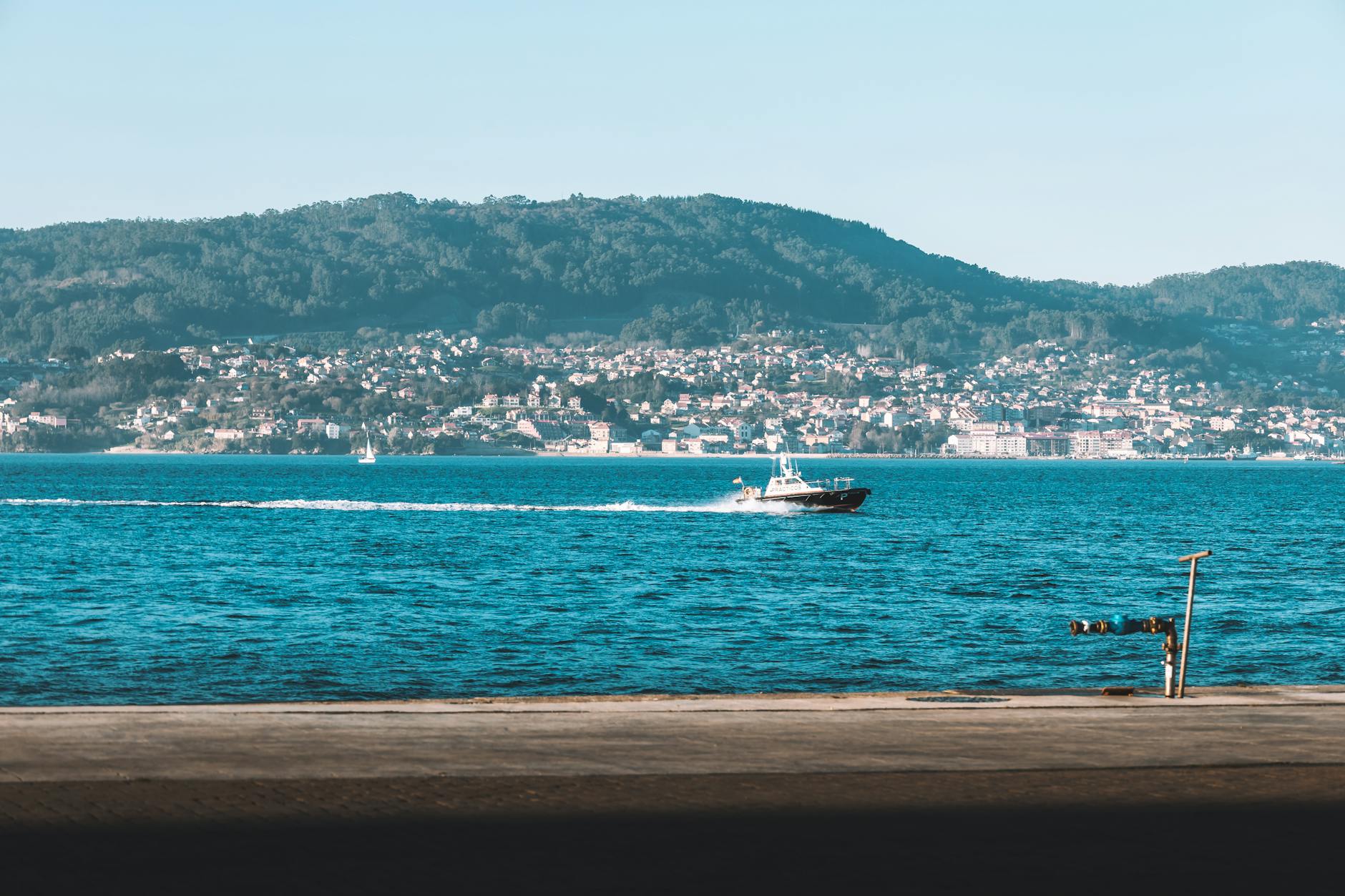
A 2-hour drive south on the AP-9 takes you to Combarro, a fishing village so picturesque it can feel like a film set. The Conjunto Histórico has more than 30 stone hórreos (granaries) lined up directly on the seafront, fishermen's houses built on bare rock, and cruceiros (stone crosses) at every corner. The historic centre is compact and entirely free to walk. Seafood dinner with views over the Ría de Pontevedra.
Pontevedra — Spain's Quietest Old Town
Just 25 minutes from Combarro. Pontevedra's casco antiguo is car-free and consistently ranked among the prettiest old towns in Spain. Visit the Igrexa da Virxe Peregrina — the Pilgrim Virgin church, built in the shape of a scallop shell, the symbol of the Camino. End at Praza da Leña ("Firewood Square") for the postcard wine-and-tapas moment Galicians take for granted.
Vigo — Atlantic City & Cíes Islands
Half an hour further south brings you to Vigo. If you've planned ahead and have a permit, catch the morning ferry to the Cíes Islands — Praia das Rodas was once named "best beach in the world" by The Guardian. Permits are issued daily on xunta.gal and sell out fast in summer. Back in Vigo by late afternoon, walk the Casco Vello and finish with oysters on the famous Rúa da Pescadería ("Oyster Street") at sundown.
Ourense — Thermal Springs Finale
The final leg, ~90 minutes inland. Ourense is the thermal capital of Galicia. The central As Burgas hot springs are free and right in town. For an actual soak, head to Termas de Outariz on the edge of the city — much cleaner and more atmospheric. Cross the Roman Ponte Vella, then end in the Zona dos Viños for a glass of Ribeiro wine before driving back to Santiago airport (~1h 45) the next morning.
Practical Information
When to Go
May–September are the easiest months: long days, warmer Atlantic water, and the Cíes ferries running on full schedule. July and August are peak — book Cíes permits and Santiago hotels weeks in advance. October turns moody and beautiful but rainier; many of the smaller coastal villages quiet down dramatically. Avoid January–March unless you genuinely don't mind rain.
Where to Stay
In Santiago, staying inside the medieval old town is the experience. The historic Hostal dos Reis Católicos on Praza do Obradoiro is one of Spain's oldest hotels (founded 1499, now a parador) — a once-in-a-trip splurge. In A Coruña, the seafront Riazor area gives you beach + city in one. In Pontevedra and Combarro, small casas rurales are the move over chain hotels.
Getting Around
Galicia's roads are good. The AP-9 runs the entire coast from Ferrol to the Portuguese border (toll). The A-6 from Madrid to A Coruña is toll-free and well-maintained. Watch for slow weather: heavy rain can drop visibility on the rural backroads. None of the cities on this route currently have Spain's Low Emission Zone (ZBE) restrictions, so any rental car is fine.
Eating: What's Worth Trying
- Pulpo á feira — paprika-dusted octopus, the national dish of Galicia. Best inland (Lugo, Ourense) where the tradition began.
- Percebes — gooseneck barnacles, harvested at risk of life from Atlantic rocks. Expensive but unforgettable.
- Empanada gallega — savoury pie, usually tuna or sardine, eaten cold.
- Tarta de Santiago — almond cake stamped with the Cross of Saint James. Every bakery in Santiago makes one.
- Albariño from Rías Baixas (coastal), Ribeiro and Mencía from inland Galicia. Try all three across the week.
Budget Guide
- Budget: €70–100/day (pensión, market food, free sights like the Roman Walls)
- Mid-range: €130–180/day (3-star hotel, seafood lunches, paid attractions, Cíes ferry)
- Comfort: €220–350/day (parador stays, fine dining, private guides)
Ready to plan your Galicia road trip? Our AI planner builds a personalised itinerary in seconds.
Build My Itinerary →More Spain Travel Guides
- San Sebastián & the Basque Country
- Planning a Spain Road Trip: The Complete Guide
- Renting a Car in Spain: What to Know Before You Book
- The Best Paradores in Spain (with Galicia picks)
- The Ultimate 7-Day Andalusia Road Trip Itinerary
Compare car rentals at Santiago de Compostela (SCQ)
DiscoverCars compares Hertz, Europcar, Sixt and local Spanish agencies at SCQ — the right pickup point for this full Galicia loop. Book 4–6 weeks ahead for May–September rates.
Hotels across the seven Galician cities
Book Santiago and Vigo first — they fill up fastest, especially during pilgrim season (May–September) and Cíes Islands season (June–September).
Tours, Cathedral visits & Cíes Islands trips
Skip-the-line Cathedral tours, Pórtico da Gloria slots, and small-group Cíes Islands boat trips from Vigo. Most sell out 2–4 weeks ahead in summer.